 Midland SoftNexa Water
Midland, Texas · Water softener installation
Water Softener Installation in Midland, TX
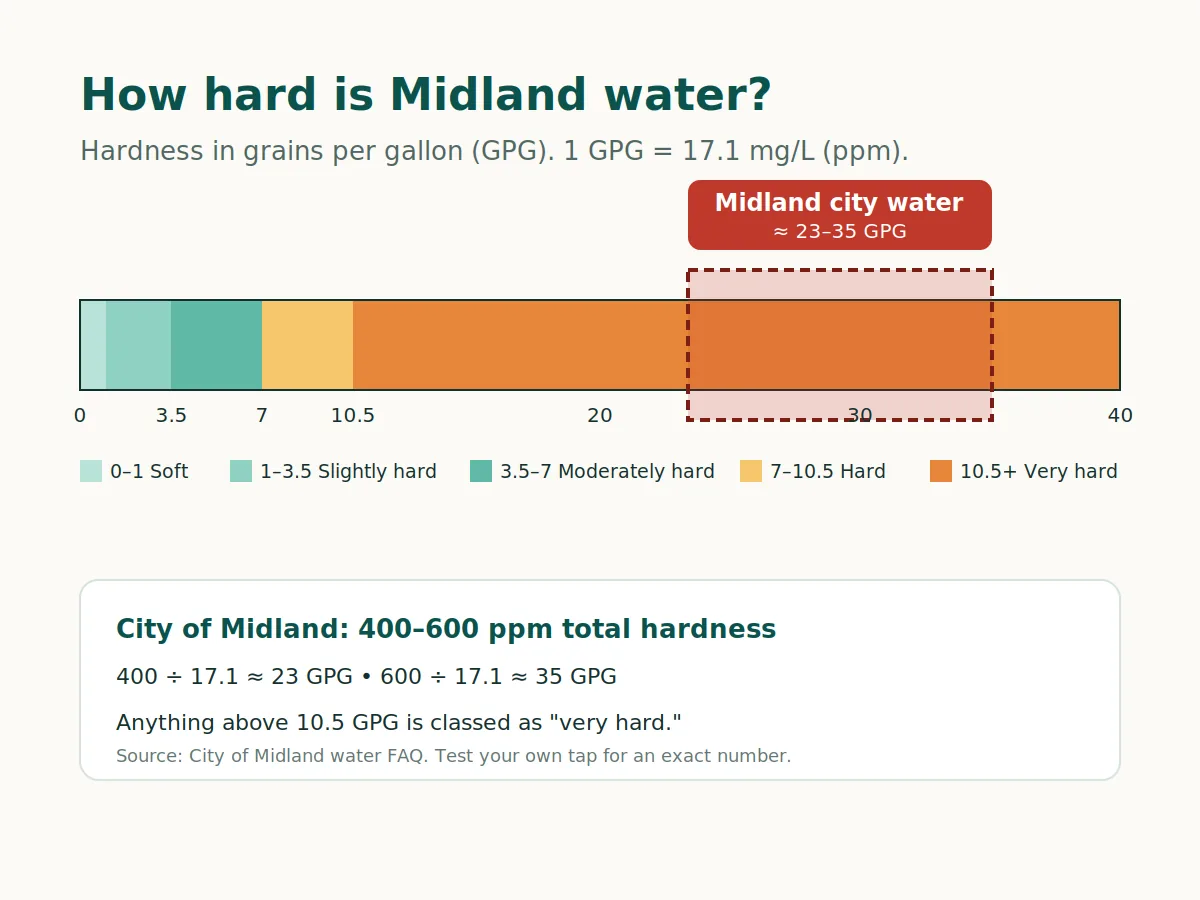
Midland city water tests at 400–600 ppm of hardness, roughly 23–35 grains per gallon. That is more than double the "very hard" line. One call connects you with an independent local installer who can test your water, size a softener correctly and install it on your main line.
Call (432) 946-0088 See typical costsFree call · No obligation to hire · Written estimate from the provider
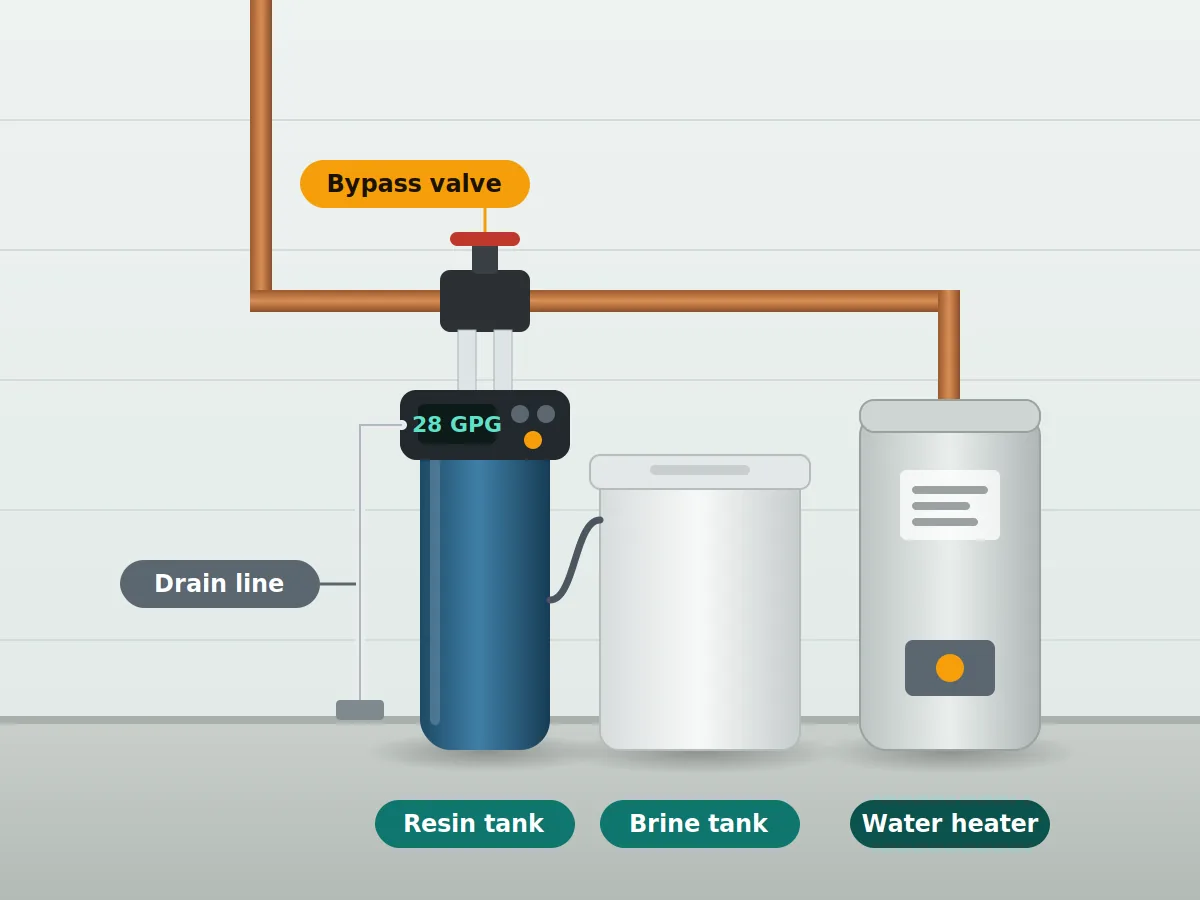
Short answer: Water softener installation in Midland, TX means a provider tests your water, sizes a softener for very hard water (about 23–35 GPG on city supply), plumbs it into your main line with a bypass valve, connects a drain with an air gap and programs it to your hardness. Most installs take half a day to a full day and for a standard salt-based unit commonly cost about $1,000–$2,500 total. Call (432) 946-0088 to be connected with a local installer.
Last updated: October 6, 2026 · Water data from the City of Midland
Midland water hardness guide
The City of Midland reports a water hardness range of 400 to 600 parts per million. Divide by 17.1 and you get about 23 to 35 grains per gallon (GPG). Water industry scales call anything above 10.5 GPG "very hard," so Midland city water sits well past that line, and it is one of the main reasons scale builds up so fast in local homes.
Where Midland's water comes from
Midland blends several sources. Surface water comes from Colorado River Municipal Water District (CRMWD) reservoirs, including Lake J.B. Thomas, E.V. Spence Reservoir and O.H. Ivie Reservoir. Groundwater comes from the city's Paul Davis Well Field and the T-Bar Ranch well field in Winkler County, drawn from the Ogallala and Edwards-Trinity aquifers. Because the mix shifts with demand and drought, hardness and taste at your tap can change through the year. That is why a softener with a little extra capacity works better here than one sized to the bare minimum.
Chlorine, taste and the "rotten egg" smell
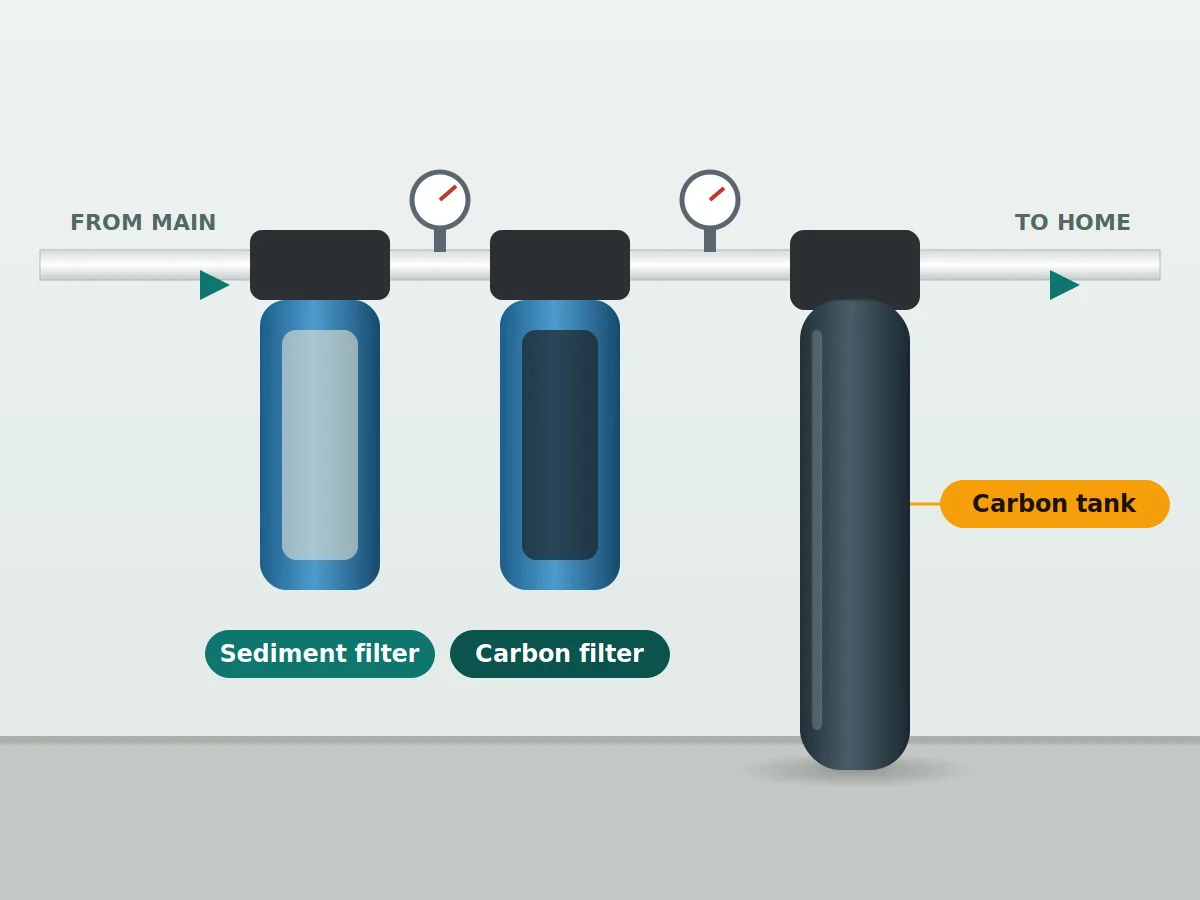
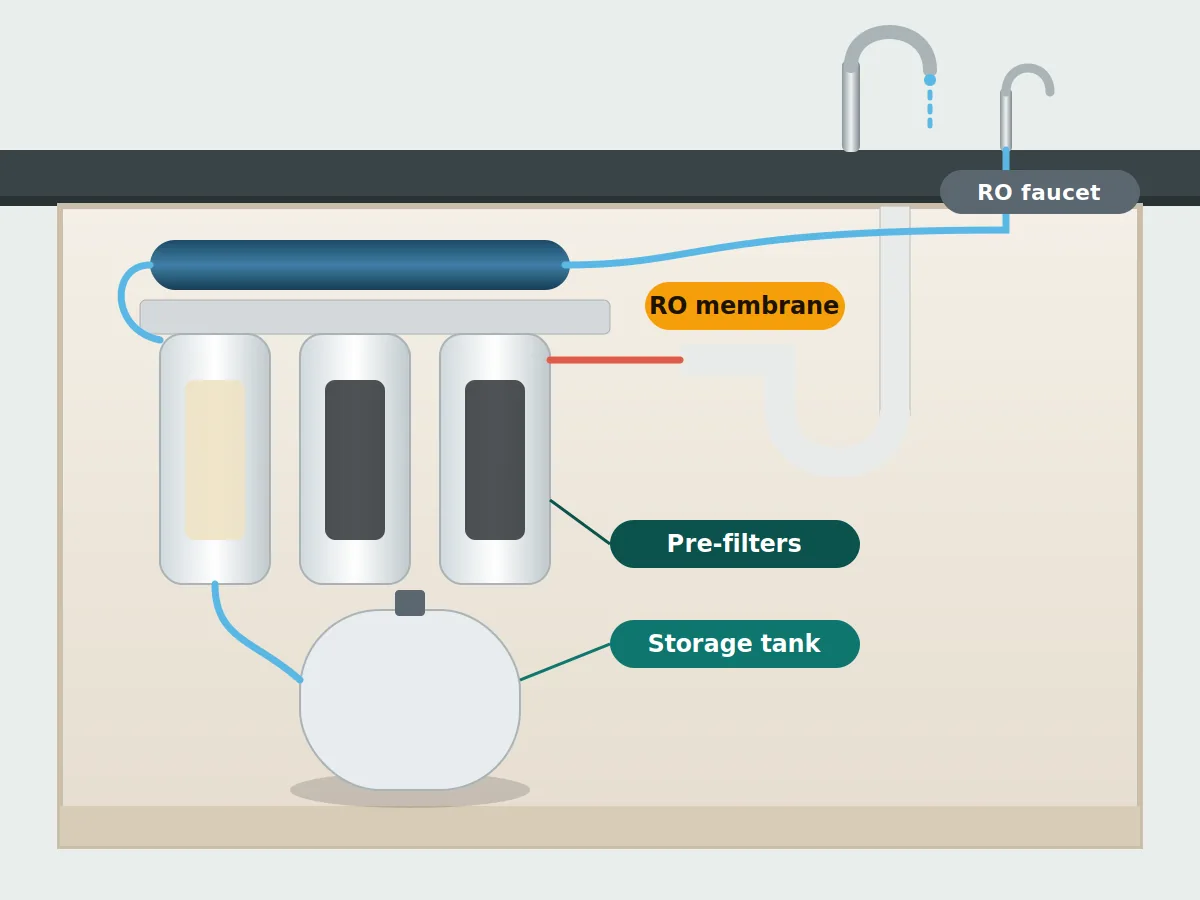
City water is disinfected, and the city periodically switches to a temporary chlorine flush, so some weeks you may notice a stronger pool-like taste. A softener does not remove chlorine. A carbon filter does, which is why many Midland homes pair a softener with a whole-house filter or reverse osmosis at the kitchen sink.
A sulfur or rotten-egg smell that only shows up in hot water usually comes from the water heater's anode rod reacting with minerals in the water, not from the softener. If the smell is in cold water too, and especially on a private well in Midland County, it can point to hydrogen sulfide. That needs a filter, not just a softener, so mention it when you call.
What this hardness does to a Midland home
At 23–35 GPG, scale forms quickly on anything that heats water. Water heaters lose efficiency and start popping or rumbling, tankless units clog, showerheads lose pressure, glass shower doors fog over and dishwashers leave a white film. Soap and shampoo also lather poorly in hard water, so you use more and skin and hair can feel dry. A correctly sized softener stops new scale at the point where water enters the house.
Signs you need a water softener
- White, chalky crust on faucets, showerheads and the toilet tank
- Spots and cloudy film on dishes and glassware after the dishwasher
- Soap that won't lather and a filmy feel on skin after showering
- Stiff, dull laundry and towels that feel scratchy
- A water heater that pops or rumbles, or hot water that runs out sooner
- Low pressure from showerheads that clears up after descaling
- An old softener where water suddenly feels hard again (see repair)
Not sure how bad yours is? A water hardness test gives you an exact GPG number in a few minutes, and a good installer will test before recommending a size.
What water softener installation includes
A whole-house softener goes on the main line where water enters the home, usually in the garage near the water heater. Many Texas homes built in recent decades already have a pre-plumbed "softener loop" in the garage, which makes the job faster and cheaper. Older Midland homes without a loop need new piping to the main line. A standard installation covers:
- Water test and sizing. Hardness, iron and household size decide the grain capacity.
- Bypass valve. Lets you turn the softener off without shutting off water to the house.
- Main-line connection. Soft water feeds the house and water heater. Many installers leave the outdoor hose bibs on hard water to save salt.
- Drain line with an air gap. Carries regeneration water away and prevents backflow into the softener.
- Brine tank setup. Salt is loaded and the brine line and overflow are connected.
- Programming and testing. The control valve is set to your hardness, a first regeneration is run and the output water is tested.
Want the whole home treated? See whole house water softener installation for details on larger homes and two-tank systems.
What size softener do Midland homes need?
Size is where most hard-water problems start. A unit that is too small regenerates every day or two, wastes salt and wears out early. Installers use a simple formula: hardness (GPG) × 75 gallons × number of people = grains removed per day. The table uses 30 GPG, the middle of Midland's city range.
| People in home | Grains removed per day | Typical softener size |
|---|---|---|
| 1–2 | 2,250–4,500 | 32,000–40,000 grain |
| 3 | 6,750 | 48,000 grain |
| 4 | 9,000 | 64,000 grain |
| 5 | 11,250 | 80,000 grain |
| 6+ | 13,500+ | 96,000 grain or twin-tank |
Add about 4 GPG to your hardness for every 1 ppm of iron. Private well water in Midland County varies a lot, so always test first.
How much does water softener installation cost in Midland?
National cost guides from HomeAdvisor and Angi put water softener projects anywhere from about $200 to $6,000, with an average around $1,500 and installation labor typically $150 to $1,000. For a standard whole-house, salt-based softener on an existing loop, most homeowners land roughly in the $1,000 to $2,500 range all in. Midland's very hard water tends to push you toward a larger unit, which sits in the upper half of those numbers.
| Factor | Why it matters |
|---|---|
| Grain capacity | At 23–35 GPG, larger households need 48,000–80,000+ grain units, which cost more than small cabinet models. |
| Softener loop or not | A pre-plumbed garage loop can keep labor low. No loop means new piping to the main line. |
| Valve and tank type | Metered (demand) valves and twin-tank systems cost more but use less salt and water. |
| Added filtration | A carbon filter for chlorine or an RO system at the kitchen sink adds equipment and labor. |
| Removing the old unit | Disconnecting and hauling away a dead softener can add to the bill. |
| Permits and code work | Drain air gaps, outlets and any required permits add small costs. |
Ongoing costs are mostly salt and an occasional service visit. Hard water means more frequent regeneration, so Midland homes go through salt faster than homes in soft-water cities. A salt delivery service can handle that for you. Always ask for a written estimate that lists the unit model, grain capacity, labor and warranty before you agree to anything.
Salt-based vs salt-free softeners for Midland water
| Salt-based (ion exchange) | Salt-free (conditioner) | |
|---|---|---|
| Removes hardness | Yes, water tests near 0 GPG | No, water still tests hard |
| Stops spots and soap film | Yes | Little to no change |
| Reduces scale in heaters | Yes | Reduces it |
| Needs salt and a drain | Yes | No |
| Upkeep | Add salt, yearly check | Media replacement every few years |
| Best for | Most Midland homes at 23–35 GPG | No drain, low-sodium needs, or no-salt preference |
For most homes on Midland city water, a salt-based softener is the system that actually solves the problem. A salt-free system can make sense if you have no drain nearby or don't want salt, as long as you know your water will still test hard. If you own a tankless water heater, check its manual: many manufacturers set a maximum hardness, often in the 7–12 GPG range, to keep the warranty valid.
How to choose a water softener installer in Midland
Every provider we connect you with is an independent business, so it pays to ask the same questions you'd ask anyone working on your plumbing. A good installer will answer all of these without hesitation:
- License: In Texas, softener work is done by a licensed plumber (TSBPE) or a TCEQ-licensed Water Treatment Specialist. Ask for the license number.
- Water test first: Will they test your hardness and iron before recommending a size?
- Written estimate: Model, grain capacity, valve type, labor and haul-away all listed.
- Warranty: How long is the manufacturer warranty on the tank, resin and valve, and is labor covered?
- Financing: Do they offer payment plans if you need them?
- Permit and code: Will they handle any required permit and install a proper drain air gap?
- Service after install: Who do you call if the water turns hard again?
How our service works
- Call (432) 946-0088. Tell us what's happening: new install, hard water, an old unit or a smell.
- Get matched. We connect you with an independent provider that covers your part of Midland.
- Test and estimate. The provider checks your water and plumbing and gives you a written estimate.
- Installation. Usually half a day to a full day, done on a schedule you agree with the provider.
- Follow-up. Output water is tested, settings are explained and you get a salt and service routine.
Midland SoftNexa Water is a referral service, not an installer. That is how we keep the call free and the choice yours: you deal directly with the provider on price, licensing, warranty and scheduling, and you're never obligated to hire anyone. Read more about how we work.
Already have a softener?
If your water suddenly turned hard, check the salt level and look for a hard crust (salt bridge) in the brine tank first. Still hard? Start with troubleshooting. Units under about 10 years old are often worth a repair. Older units with worn resin or a cracked tank usually call for a replacement or upgrade.
Systems Midland homeowners ask about most
Water softener services in Midland
Midland neighborhoods we serve
We take calls from homeowners all over Midland, from established neighborhoods around Midland Country Club to newer subdivisions on the north and west side of town. Homes in older areas are more likely to need new piping for a softener, while many newer builds already have a garage loop. These areas get the most calls:
Water softener installation FAQ
How much does water softener installation cost in Midland, TX?
National cost guides from HomeAdvisor and Angi put water softener projects between about $200 and $6,000, with an average near $1,500 and labor usually $150 to $1,000. A standard whole-house salt-based softener on an existing garage loop commonly runs about $1,000 to $2,500 installed. Larger units for Midland's very hard water, twin-tank systems, new piping or added filtration raise the price. Ask the provider for a written estimate.
How hard is Midland's water?
The City of Midland reports hardness of 400 to 600 parts per million, which is roughly 23 to 35 grains per gallon. Anything over 10.5 GPG is classed as very hard. Private wells in Midland County vary, so test your own water for an exact number.
What size water softener do I need in Midland?
Multiply your hardness in GPG by 75 gallons and by the number of people in the home. At 30 GPG, a family of four removes about 9,000 grains a day, which usually calls for a 64,000-grain softener. Two people often need 32,000 to 40,000 grains and five people about 80,000. Add about 4 GPG for every 1 ppm of iron.
How long does water softener installation take?
Most installs take half a day to a full day. A home with a pre-plumbed softener loop in the garage is on the quicker end. Homes that need new piping to the main line, a new drain or added filters take longer.
Do I need a licensed installer or a permit in Texas?
In Texas, water softener installation is done by a licensed plumber (TSBPE) or a TCEQ-licensed Water Treatment Specialist. Ask for the license number and ask whether your job needs a City of Midland permit. A proper installer will also fit an air gap on the drain line.
Is a salt-based or salt-free softener better for Midland water?
For most homes on Midland city water, a salt-based softener is the better choice because it actually removes hardness. A salt-free conditioner reduces scale, but water still tests hard and spots and soap film remain. Salt-free systems suit homes with no drain nearby or owners who want to avoid salt.
Will a water softener protect my tankless water heater?
Yes. Softened water stops new scale from forming in the heat exchanger. Many tankless manufacturers set a maximum hardness, often in the 7 to 12 GPG range, to keep the warranty valid, and Midland city water is well above that. Check your heater's manual.
Can a softener handle well water in Midland County?
Often yes, but well water should be tested first for hardness, iron, sulfur and nitrates. Iron adds to the softener's load and a rotten-egg smell usually needs a separate filter. Mention that you are on a well when you call.
Should I add a reverse osmosis system with my softener?
Many Midland homes do. A softener adds roughly 8 mg of sodium per liter for every grain of hardness it removes, and it does not remove chlorine or dissolved solids. An under-sink reverse osmosis system gives cleaner-tasting drinking and ice water and pairs well with a softener.
Should I repair or replace my old water softener?
Units under about 10 years old with a valve, seal or control problem are usually worth repairing. Older systems with exhausted resin, a cracked tank or repeated breakdowns are usually better replaced with a correctly sized unit. Ask the provider to quote both.
Does softened water taste salty?
No. Softened water does not taste salty, although it contains a little added sodium. If you watch your sodium intake, use potassium chloride instead of salt or drink from a reverse osmosis faucet.
Do you install water softeners yourselves?
No. Midland SoftNexa Water is a free referral service. We connect you with an independent local provider who handles the testing, estimate, installation, licensing and warranty directly with you. You are never obligated to hire anyone.
Sources
Hardness range (400–600 ppm) and water sources: City of Midland water quality FAQ and City of Midland water quality reports. Cost ranges: HomeAdvisor and Angi national cost guides as summarized in 2026 consumer cost guides. Hardness classifications follow the standard water industry GPG scale. Your own water may differ, so test before buying.